Wilbury Theatre Group kicked off the 2026-27 season with the World Premiere of "Same Difference," written and directed by Don Mays. Set in Providence, 1993, "Same Difference" tells the story of a gang leader from Harlem arrives at his ex-girlfriend's apartment in the middle of the night. He's wounded, on the run, and has nowhere else to go. What he doesn't know is that her roommate is gay, grieving and not about to back down.
In the interview below, Don Mays gives us insight into Providence in the '90s, transitioning the production from film to theater, working with the Wilbury Theatre Group and more.
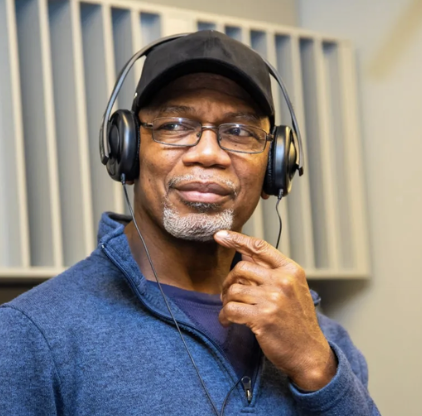
1. Providence in the early '90s doesn't get talked about much on stage. What do you want people who didn't live through it, or who aren't from here, to understand about what that decade actually felt like on the ground in this city?
I had recently moved from New York City to Newport, so I was only just beginning to discover Providence. Almost immediately I was introduced to Donald King of The Providence Black Rep and Bert Crenca of AS220. I had known Karen Baxter from my NYC days and was excited to see she was at Rites and Reasons. Therefore, Providence for me was a place where the arts were happening. Immediately, I thought this was a place where I could create art. Doors were opened to me as a filmmaker that didn’t come with the challenges of filming in a large city like New York. An excitement and an embrace in Providence surrounded me and the project, which let me know I could complete the film with the amount of money we had. These are among the key reasons I chose to make the film in Providence and connect it to what was going on here.
The work I was doing to pay the bills, at the time was in community service. I worked at a non-profit in Newport that serviced communities across the state, focused mostly on Black youth in Newport, Providence and Central Falls. I was seeing here, on a smaller scale, the same problems that were happening in the larger cities across the country. Young Black boys were getting caught up “in the life” dealing drugs, going to prison and dying in disproportionate rates in these three Rhode Island cities. My work in that organization soon began to include collaborations with local HIV/AIDS prevention organizations serving youth, including those in the LGBTQ community. The work was the same. Both constituencies, or communities were experiencing similar disparities, and similar losses. And because of how society viewed these two communities, and how they viewed themselves, efforts to support them were extremely challenging and strikingly similar. It did not take long for me to see, from a boots on the ground, eye-level view, there was a unique and compelling story to be told.
2. Before it was a staged production, "Same Difference" was a film that you made in the 1990s. What was your reasoning for why this story would be impactful for the stage? How has the story changed as you brought it into the theatre?
As an indie filmmaker, making a low-budget/no-budget feature film, you write scripts with cost-cutting elements in mind including a small cast, no expensive car chases or crashes, and a limited number of locations to name a few. Even with these limitations, you still must tell the story. The script still must work. "Same Difference" as a film and as a stage play has a small cast, limited number of locations or on stage, sets, and not only does the story hold up on stage,but also the power of live actors, in an intimate theatre, really heightens the experience. The stage production affords the actors and the audience the connectivity that only happens with live theatre. "Same Difference," as a play, puts us in that space, returns us to that time and holds up that mirror to reflect the similarities of so much of what is going on with us today, that is so much like the “us” of that era.
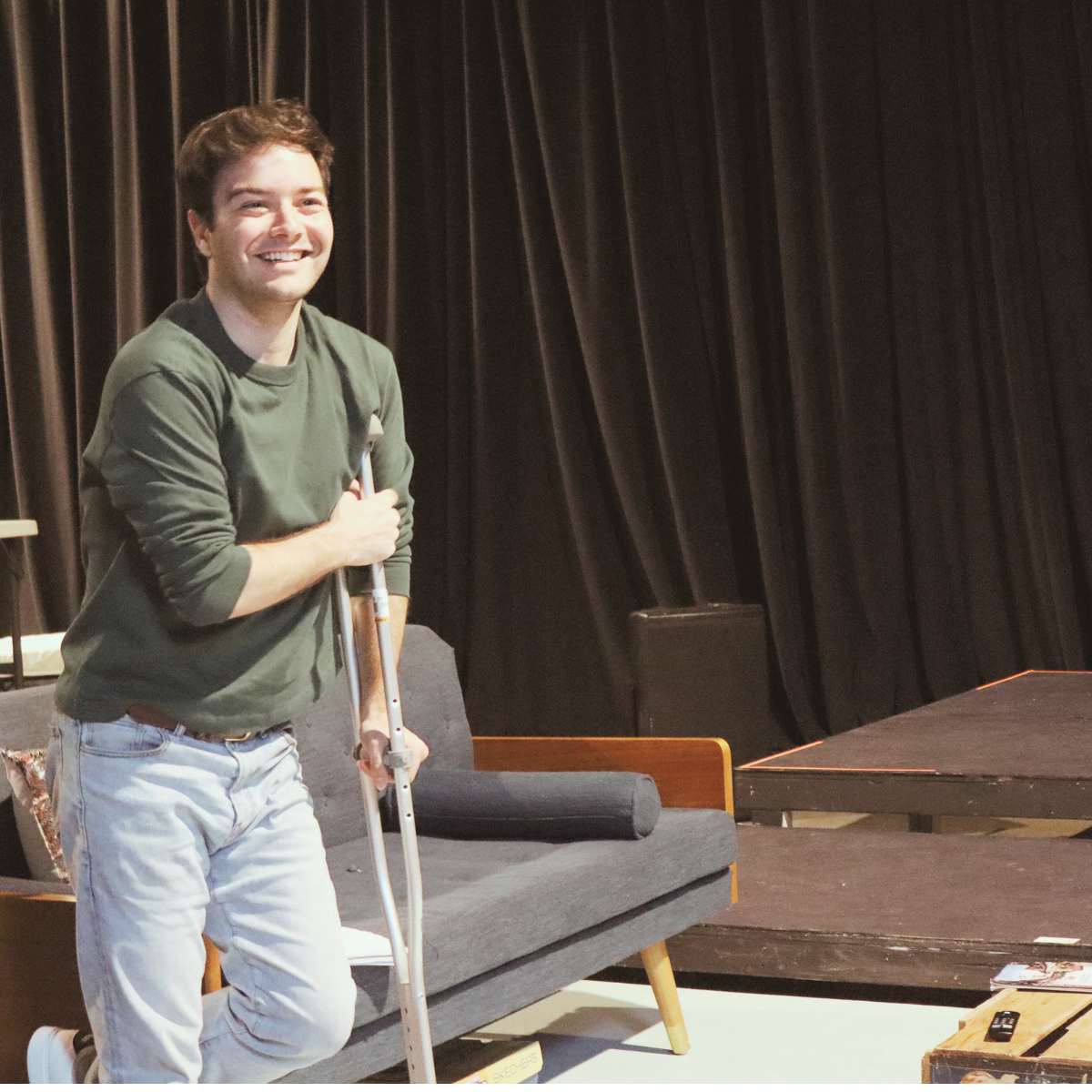 3. Same Difference is set almost entirely in one small Providence apartment in the early-to-mid '90s. What made a two-bedroom apartment in this specific city, at this specific moment, the right container for this story?
The two male lead characters, Alley (Alley Kat), a Black Harlem drug dealer, who only knows the streets of NYC and Joel (Ms. Lizzette), a White Drag Queen who has experienced Providence, both in and out as a queer person, believe themselves to be polar opposites. On the surface, the two do appear to have nothing in common. When confined in this tiny little Providence apartment, the two personalities immediately clash, based on how each perceives the other. However, the similarities and parallels of their very different lifestyles is revealed through their single connection, their personal relationship with Brenda.
Providence for Alley, with its one “clean” train station, provides the distance from New York, and the proximity to Brenda to give him the comfort, or respite he needs to recover. For Joel, although Providence is home, he has navigated it like someone who has never really felt at home here.
For these reasons, the apartment sits as kind of as a neutral playing field where neither Alley nor Joel feel they have the homecourt advantage.
4. What is "Same Difference" saying about the two epidemics of AIDS & gang violence during this time?
It says the same thing about that era’s powers-that-be and the general population’s willingness to passively look on, or look away, as today, we stand by while masked goon squads beatdown and kill innocent citizens. Or the inhumanity of detention centers where babies are permanently separated from their mothers. To allow such violence and loss of life in any era, is a direct reflection on that society. It illustrates, at our core, who we are as a people. It tells us that, until it directly affects me, I am okay with it. Or I have the comfort, in my mind’s eye, to look away.
5. You've worked with Wilbury on multiple occasions. You collaborated on your Webby Award-winning podcast "God Talks to an Agnostic," recently directed "Fat Ham" and "The Comeuppance," and are now writing and directing the season opener. What is it about Wilbury, specifically, that keeps pulling you back and what does it give you as an artist that you couldn't get anywhere else in Providence?
I believe the plays that Wilbury chooses are plays that no other theatre in Rhode Island would produce. The plays that I author, I believe would have no other home in Rhode Island. It’s right in Wilbury’s mission, that “fearless vision.” I believe the work I create makes bold, self-reflective statements about culture, current societal norms and ills, and ultimately, the good, the bad and the ugly of what we as a people stand for. I’m not saying that other theatres don’t do challenging work. That absolutely is not the case. I’ve seen and enjoyed some really powerful theatre in all the local theatres. Rhode Island is fortunate to have all of our theatre venues. For me, Wilbury is my go-to place. The place in Rhode Island theatre that I call home.